Daniel: An Example of Prayer

We discussed prayer in our small group the other night. That got me thinking about danielbiblical examples of those that prayed mightily. There are many examples, of course; Jesus being the preeminent example. But a somewhat obscure example is what I was drawn to. That example is Daniel.

One of my professors stated that “his [Daniel’s] prayer should inform how we pray.”[1] This phrase caught my attention because I spend much time in prayer myself. I do not profess to be any sort of mighty intercessor, but I am called and drawn to pray not just for myself or my family, but also for my specific church and our members and “attenders.” I also pray for the advancing of the gospel of Christ and for the forgiveness of our nation. I often feel a burden to pray, but at times I fight against a sense of futility in prayer because I am not seeing the answers I am expecting to see. Thus, the above quote inspired me to delve into this prayer in more detail, and in so doing I discovered key characteristics that built Daniel into a mighty man of prayer that moved the heart of God.

Daniel was “prompted to pray because he was reading Scripture.”[2] Archer states that Daniel was “a diligent student of Scripture who built his prayer life on the Word of God.”[3] Berrigan states that “Amid great darkness, Daniel opens the scroll. Thus once more an important principle is illustrated. This: while time lasts, scripture is never to be thought, or dealt with, as lying inert on a page. No, it is … a prodigious energy. It flares up in our face; it brings to bear upon our sorry human scene the very truth of God.”[4] Daniel held God’s Word in the highest regard, clearly displaying that he understood that, “You [God] have magnified Your word above all Your name” (Psa. 138:2b, NKJV).

Because he knew Scripture so well he was able to pray along the lines of the truth he had learned from the Word of God. In other words, Daniel’s prayers aligned with the truth he knew from Scripture which meant that his prayers were in alignment with the very heart of God from which Scripture originally flowed out of.

What is also interesting is Daniel’s praying is visible throughout the Book of Daniel. A significant precursor to the great prayer of Chapter 9 is the events of Chapter 6.

In Chapter 6 we see Daniel excelling above all the other satraps and governors (cf. vv. 2-3). This angered these men so they sought a way to tarnish his reputation in the eyes of King Darius. However, “these men said, ‘We shall not find any charge against this Daniel unless we find it against him concerning the law of his God’” (v. 5).  The charge they built to trap Daniel was his evidently well-known habit toward prayer. So King Darius was cajoled into signing a decree that his subjects should only pray to him and any violators would be thrown into the den of lions (vv. 6-9). Daniel was aware of this decree, so now not only was he in exile he was now facing a capital crime by continuing to engage in prayer. “Under such catastrophe, existence itself is shaken”[5] but still Daniel responds by continuing his practice of praying three times a day “as was his custom since early days” (v. 10b) knowing very well that if he is caught he will suffer dire, if not fatal, consequences.

This is stunning because it is likely he could have continued to pray minus the outward expression of prayer, but apparently Daniel found that compromising because instead he continues his outward expression of prayer by opening his windows, facing Jerusalem and kneeling three times a day. Scripture also informs us that Daniel, even under the threat of committing a capital offense, still gives thanks to God (v. 10).  “Such heroism does not develop overnight, nor is it created in a vacuum. It is the mature fruit of lives and characters that have been forged by experience, … and by faithfulness and obedience.”[6]

We know that by the grace of God Daniel survived the lions’ den while those that plotted against Daniel met their demise by the very means they intended for Daniel (not unlike Haman in the Book of Esther, about another heroic character and another somewhat humorous expression of God’s poetic justice). Daniel’s survival entices King Darius to honor the God of Daniel and then we see Daniel move into more visions and more prominence in the Persian culture, which, of course, leads us to the prayer of Chapter 9. But we’ll look at that next week.


[1] Quote from Professor Mark Jacobson, Corban University.

[2] Ibid.

[3] Gleason Archer, “Daniel,” in The Expositor’s Bible Commentary, Frank Gaebelein, Gen. Ed., (Grand Rapids: Zondervan Publishing House, 1985), p. 107.

[4] Daniel Berrigan, Daniel: Under Siege of the Divine (Farmington: The Plough Publishing House, 1998), pp. 155-6.

[5] Berrigan, p. 4.

[6] Sinclair B. Ferguson, Daniel: The Communicator’s Commentary, Gen. Ed. Lloyd Ogilvie (Wasco: Word Books Publisher, 1988), p. 27.

Focused Prayer through Cycling?

I’ve recently noticed how quickly my mind becomes focused when riding a bike down a steep hill at nearly 30 miles an hour. A more intense, laser-type focus springs forth when this descent has me inches away from a rumbling tractor-trailer on my left and a four inch concrete curb on my right. Prayer suddenly emerges when the bike path I’m navigating through is debris-strewn with rocks, twigs, tire-puncturing glass and odd bits of metal. Then, invariably, the light turns red! My mind effortlessly switches to shifting gears, applying brakes and unclipping my right cleat from the pedal (see my post on Bike Tipping and Humility for more on how not to unclip). At the red light I notice my breathing is heavy but my mind is amazingly aware and engaged. I’m awake! I’m alive! And I’m loving life!


I Can’t Run?

For some reason, this reminds me of when my neurosurgeon told me stop running; it was like a gut-punch knocking the wind out me. I loved to run. I could pray when I ran; meditate or ponder some complex work-related issue when I ran. Running was also the quickest way to stave off those pesky love handles!

Cycling certainly helps keep me fit and trim, but I can’t just put my shoes on and run. And I can’t ride my bike while lost in prayer or some other deep thought. So I’ve had to adapt.

Cycling requires more preparation and more equipment. But, alas, I’ve been riding consistently since the summer of ’13 when God blessed me with the ability to buy a newer bike that better fit my “newer” neck. I did a lot of riding when I was younger, but gave it up when I started a family. When I wanted to start riding again, I discovered my old bike didn’t fit me anymore, primarily due to neck surgeries; after all, triple fusions have a way of messing with mobility! So I needed a new bike. Granted, it’s not a super expensive bike, but neither am I a super-expensive rider. Do I really need carbon everything and the fanciest gadget that talks to every satellite? No, not really, I’m not going to set any Strava records and I get dropped in every group ride I participate in; so my equipment is very solid, mid-range stuff. Maybe someday I’ll share more details about my specific bits of equipment.


A Little Background

long_road.jpgBefore we moved to the west side of town, my rides were typically flat and long; I could get on a long stretch of country road and let my mind sort of zone out. It could wander off in all sorts of different directions.
Living out here though, letting my mind wander even briefly could have disastrous results. I need to stay focused on the long, hard climbs; otherwise, I might slow so much I fall over or simply mentally give up. A wandering mind while urban adventure riding (UAR) could cause me to miss the car pulling out in front of me, or the light turning red or the box of nails spilled in the bike path (yes that really happened).

But what it is also teaching me is to live in the moment. Each moment in UAR can bring opportunities. Opportunities to sprint through the yellow light or climb the big hill in the midst of a bumper-to-bumper traffic jam or to watch kayakers slide effortless under the Union Street foot bridge. And with Pokeman Go, there always fully distracted bi-peds crossing my path! It’s awesome! But it requires me to be in the moment each moment.


Living in the Moment and Prayer

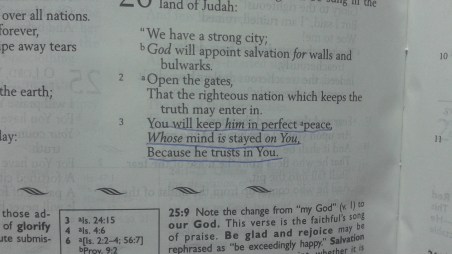
This is new to me. I’m always thinking ahead, like to the next meeting, the next vacation, Stay_mind_verse.jpgor even what’s for dinner. I rarely live in the moment. And not living in the moment makes me a terrible listener and it inhibits my prayer life. Training my mind to focus, even if it is through UAR, is developing the skill of “staying my mind.” Look what Isaiah says:
You [God] will keep him in perfect peace, whose mind is stayed on You, because he trusts you. (26:3)

This means that as I focus my mind, or lean my mind upon God, God can work His peace in my soul. Such a stayed mind helps me allow the peace of Christ to fill me (see John 14:27 and Colossians 3:15). Being scattered and unfocused just causes my mind to be agitated or simply distracted. If my prayer life is scattered, then what does that say about my heart toward God? Am I really seeking His kingdom first (see Matthew 6:33), or am I jumping around with a to-do list I want God to fill?  So the skills of living in the moment that I’m learning in my UAR efforts are also helping me in my prayer life. Now when I sit and pray, I’m more intentional about being focused on just God, His character and, of course, His grace and mercy.

Now I don’t think everyone needs to adopt a UAR life, but I do think each of us has something in our lives that we can learn from. Take gardening, for instance. Working the soil and caring for plants has way of slowing and then focusing the mind. Or what about model building, jigsaw puzzles or hiking? If we look for learning opportunities, we may be surprised how many there are in our everyday lives.

Mourning, Anger and Compression Socks


This has been a weird week, both personally and nationally.

All of the killings that have happened in our nation are numbing and tragic. Regardless of my political leanings, or thoughts on the 2nd Amendment or attitudes on activism; American families are in mourning and in need of my prayers. This is part of how I love my neighbors (Matthew 22:37-40). Our nation is in need of my prayers. God help us!


The Anger Part

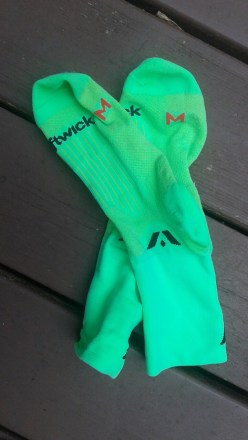
SocksI was on my bike ride yesterday when I was pondering all the mourning. As I entered onto a very busy street with a debris-strewn bike path, some dude swerved into the bike lane so his buddy could stick his upper body out of the window to scream at me. It of course startled me, and thankfully they didn’t hit or grab me, but as they sped away, I started fuming. I even yelled at them, and no, I didn’t say “thank you!” I am glad I kept both hands on the handlebars so I didn’t flail around any hand gestures that could’ve caused me even more trouble.
But as their car faded from view and I started climbing one of West Salem’s many hills, I marveled how quickly I went from mourning to anger. Yes, what those people did to me was dangerous and stupid, but I allowed them to disturb my soul. Then I started realizing how I allow a lot of other things to disturb my soul as well.

Sure, most of what is in the news is bad, but typically, we only see what the news wants us to see. We actually have to work to see the positives in life. But even amongst all the sadness and tragedy, there is still beauty. Just look around and marvel at the joy that surrounds us. Even as we pray for more of God’s presence and peace in our own souls and throughout our nation, we can at the same time be thankful for our families, flowers, birds, bikes, and so on.


Now the Socks

I was reminded of a simple example of joy when I started speeding down the hill just described, my feet were more comfortable in my new compression socks! Silly, I know, but also simple and joyful. The socks help message the calves, wick sweat away better and just add more overall comfort. And they were on sale to boot!

Like I said, it’s been a weird week, and I didn’t mention my CT scan (but that’s another story).

Observations from the Backyard

Backyard observations

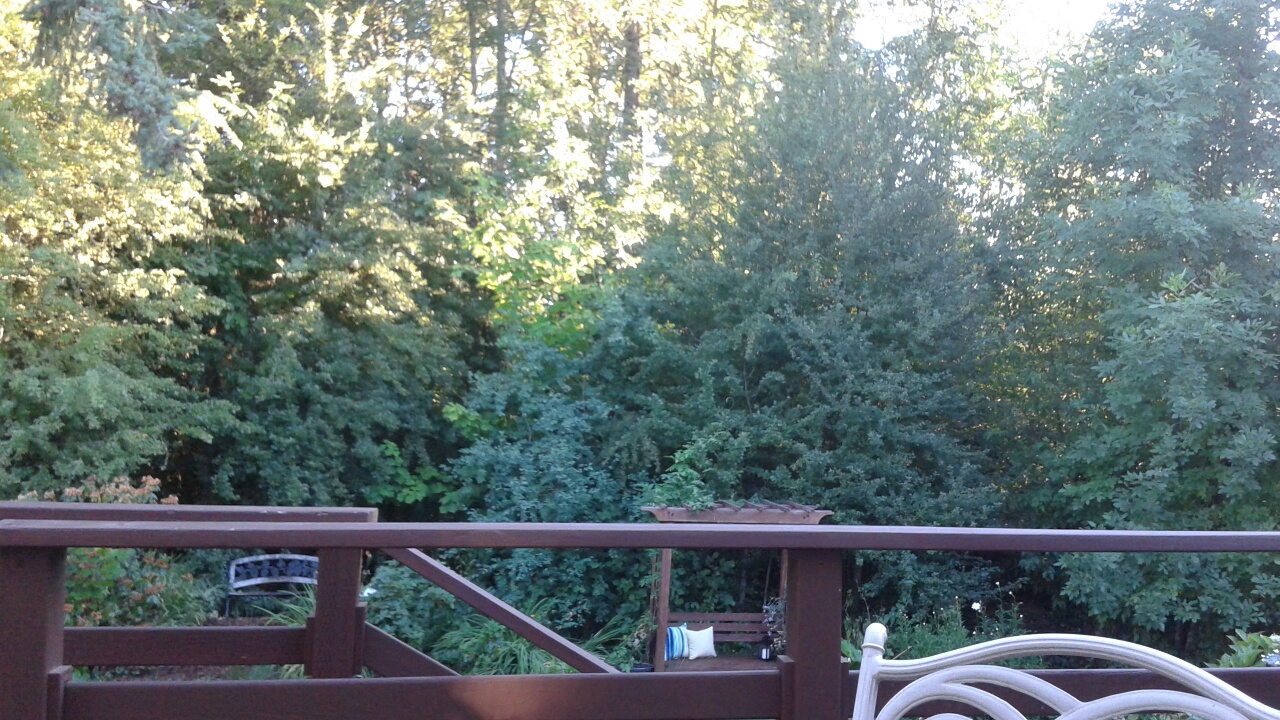
I haven’t blogged for a while. I’ve been adjusting to lots of changes. Adjusting to a new home in a new part of the city, increased (but very fun) responsibilities with my new position, and slogging through the second-to-last semester of grad school; all while trying to maintain a balance with the rest of life. Sometimes, though, it’s nice to just sit still and quiet the mind. This morning was just such a time as I sat on our bench in the backyard. It had recently rained so the air was freshly moist, the raindrops were rolling off leaves with a distinctive liquid-y plop onto other leaves or the ground, and the birds were out in force as the land drank in the refreshing after a summer of being parched. Here are just a few simple observations from this time of

quietness.

Initial Sense

The peaceful breeze,

fresh with moisture and fragrance;

Bringing season’s change.

Floating Thought

Cars rumble away,

destinations and errands.

But birdsong remains.

Almost Over

Beckoning silence.

To-do lists and checkboxes.

The tensions of life.

Uncomfortable Words and Prayer

Peace

Contemplative, centering and meditation. What do you think when you read these words? Many western Christians bristle at these words. They conjure up images of bald Tibetans in orange and red robes or multi-armed Hindu gods. And yet Scripture is full of admonitions to meditate. Often the admonitions occur with the word “wait” or “still” as well as many uses of the word “meditate.” In Psalms, meditate and meditation (a derivative of meditate) simply mean to muse, or contemplate or pray. It is also interesting to note that “the fact remains that every human brain, from early childhood on, contemplates the possibility that spiritual realms exist”[1].

Our Brains and God

God built our brains to seek after him, but somehow many of us, myself included, have lost our way in how to do this. For instance, I have task lists and check marks for how I “do” faith. My devotion time is something I squeeze in between getting out of bed in the morning and showering. But am I really seeking God or going through a motion to look spiritual? It isn’t so much the timeframe of this practice as much as it the authenticity of it. Reading Scripture and prayer are good things, but where is my head, and especially my heart, when I do them? Is my prayer a laundry list for God, a list of tasks and expectations that resemble my Franklin Planner? Or am I really desiring to commune with the God of the universe?

The Dessert Fathers from so many centuries ago knew better. “Meditation for them consisted in making the words of the Bible their own by memorizing them and repeating them, with deep and simple concentration, ‘from the heart.’ Therefore the ‘heart’ comes to play a central role in this primitive form of monastic prayer”[2]. But things have changed. Foster notes that “usually people will tolerate a brief dabbling in the ‘inward journey,’ but then it is time to get on with the real business in the real world. We need courage to move beyond the prejudice of our age and affirm with our best scientists that more than the material world exists” (emphasis in the original)[3].

I agree with Merton and Foster.

Jesus and Being Self-Aware

It is so easy to lose the peace in my soul and to allow the “joy of my salvation” to be stolen away.  Why?

Partially because I grew up in a home that breathed in anxiety and breathed out worry. We could all be starters for any team in the in the NWL (National Worry League). I don’t know if those of us from Northern European descent are more predisposed to worry or not, but it seems so genetically ingrained that it is nearly impossible to overcome. Yet Jesus still says that with God nothing is impossible; He goes on to say that He gives us peace, not worldly peace, but the peace that passes understanding (cf. Lk. 18:27, Jo. 14:27 & Phil. 4:6-7).

I want this peace; frankly, I need this peace. How can I be a light in the world when I’m dark inside? How can I expect the world to be a more peaceful place when I can’t even be a more peaceful person? This isn’t being self-absorbed, it’s being self-aware. I want to draw people to Jesus, but all I do is repel them if they look at me see a tightly wound up ball of tension that is irritable and angry. I pray, Jesus, take this away! In fact, the centering prayer phrase I’m now using at this point in my life is, “Peace in Jesus; peace in me.”

So again I embark on a discipline of incorporating more centering prayer in my life. Usually such attempts last a few days and then the busyness and tiredness of life bleed this away from me. So far, my latest attempt has lasted a week; and I love it. I still pray for people and for God’s touch in their lives. But now I’m also intentionally allowing the Holy Spirit to flow more freely in my soul. Through this I am receiving fleeting tastes of that peace I have so desperately longed for.

Over time, I will let you know how this is going.

[1] How God Changes Your Brain: Breakthrough Findings from a Neuroscientist. Andrew Newberg, MD & Mark Robert Waldman, New York: Ballantine Books, 2009. Kindle location 108.

[2] Contemplative Prayer. Thomas Merton, New York: Image Books, 1969, p. xxix.

[3] Celebration of Discipline. Richard J. Foster, New York: Harper Collins, 1978, Kindle location 277.

God at 1,000 Feet

God at 1000'

Not even half a mile away from our new home and I’m already climbing a gigantic hill. It goes from 249 feet to 1,000 feet in less than five miles; five very slow miles I might add. Because of other chores that were a higher priority I’m starting my ride in mid-afternoon where the temperature has topped 85 degrees and is expected to reach close to 100.

What am I thinking? I’m thinking about celebrating life, feeling the strain of muscle against pedal, sweat trickling down my neck and back, and catching vistas of vineyards and lavender fields. My lungs ache, my heart pounds, and my legs protest, but my spirit is running free from the shackles of stress, chores and long to-do lists.

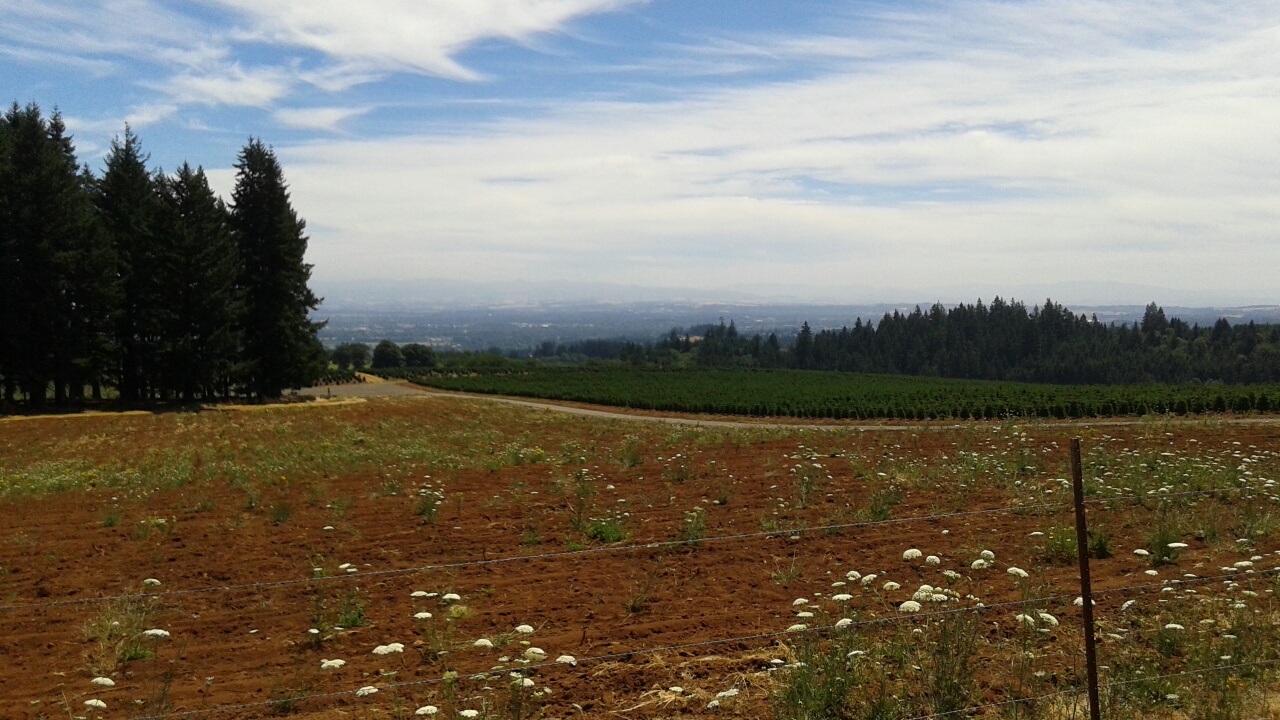
Cresting the hill I stop to drink in the view of the lush Willamette Valley: green and brown pastures, towering evergreens and sprawling deciduous trees, manicured orchards, vineyards, and purple patches of lavender wafting a calming fragrance through the breeze. The river winds in long, silver meanders with hawks and a few eagles soaring on thermals high above my head. I take just a minute of pause to snap a picture and thank God that I even get such an experience; yes, world, I am alive and glad for it!

I often recall the short conversation I had with my surgeon on Saturday, January 7, 2012 where she said, just barely 24 hours after operating on my spine for a second time that I may not do the things I used to do. While that statement is true in some respects, especially in running, chronic pain and other things, I still get to ride my bike up big hills that reveal the splendor of a creative and loving God.

So before I begin the terrifying descent I whisper (basically gasp) “thank You, Jesus!” Then I turn my attention to the looming downhill portion of the big climb. I’m not used to such big climbs, which, of course means I’m not used to bombing down such big hills—this brings a totally different type of prayer (but that’s another blog)!  For the moment, though, I celebrate life and praise the God that gave it to me.

Prayer Bench & MRI Update

Bench

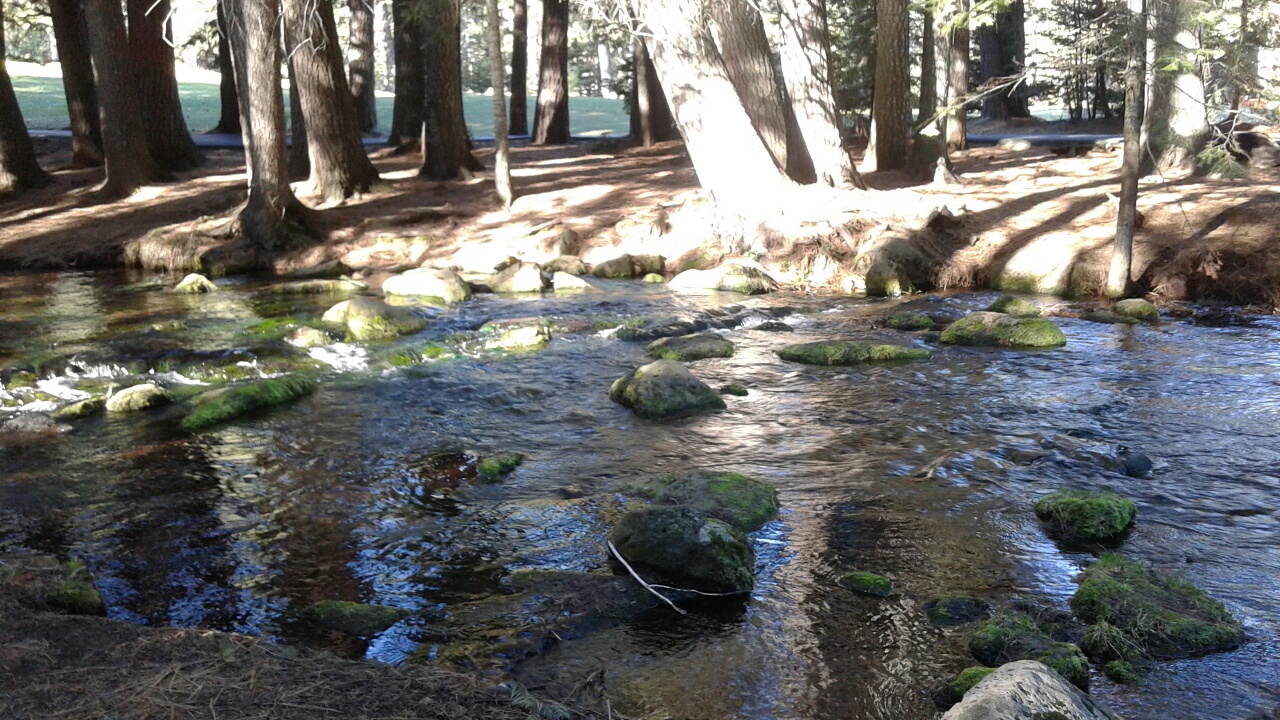
Just a quick note today. The picture depicts an extraordinary spot to sit and pray, ponder and contemplate. It is a spring that pops out of the ground in the interior part of Black Butte Ranch near the Paulina Pool complex. The brook really does babble over moss covered rocks and winds its way down a slope lined with tall pines, firs and aspens. I can’t help but praise God in such a glorious setting.

The wind whispering through the trees reminds me of Jesus talking with Nicodemus in John chapter three about the Holy Spirit. ‘Nic’ was pondering the idea of being born from above when Jesus stated, “The wind blows where it wishes, and you hear its sound, but you do not know where it comes from or where it goes. So it is with everyone who is born of the Spirit” (verse 8). I’m sure that left Nic scratching his head.

The brook and its soothing noise reminds me of being washed by the water of the Word (see Ephesians 5:26).  As I drink in the truth of Scripture I am being cleansed; sometimes the cleansing is through encouragement and sometimes through conviction.

Brook

I can go on, but I’ll wait to install other components of my “bench time” later.

To close, I want to say thank you for so much positive response on my MRI post last week. I was not expecting so much love and support. Reading through posts on my Facebook and blog site brought tears to my eyes—thank you all for your prayers and thoughts.

The MRI results do show considerable spinal degeneration but none needing another surgical intervention, thank God. My surgeon has said I need right elbow surgery to fix nerve impingement; but an elbow, while important, is not the spine!

Thank you again my friends and family, may God bless you with more of himself in your lives.

Jesus and the MRI

MRI

I hesitate to write about my health conditions because I don’t want to give the impression that I am either completely decrepit or that my situations are worse than other people’s. Yet I receive so much learning through these experiences; in fact, much of the learning is also where much humility is forged.

Friday was no different as I was once again stuffed into that all-to-familiar MRI tube. The older I get the more claustrophobic I become; therefore, rather than MRI’s becoming easier, they are actually becoming harder. I spend most of my time in that coffin-like tube not really praying but more just repeating “Jesus” over and over while desperately clinging to the “peace that passes understanding” (Phil. 4:7). Still, in between cycles of pictures when the machine is quiet, my mind wanders into places I don’t usually let it go.

Like who do I invite into my fear and suffering? This latest test I shared with my wife and my boss, and that’s it. I didn’t ask for prayer from anyone else or share the burden of the looming fear of confinement with anyone else until after the procedure. Why? I’m not sure; perhaps pride. Perhaps because it gives too much attention to the truth of aging. Maybe both. Plus I don’t want to be seen as a complainer or as a person that fails to recognize the many blessings in my life.

However, I also cut myself off from the lifeline of caring friends and family; friends and family that’ll pray for me and that have genuine concern for me. Friends and family that’ll be there in the sad event of negative test results.

So I ask God for wisdom on what to share, when to share it, and how to share it; and I ask for patience from my friends and family as I figure this out because I anticipate more tests in the future.

Integrity and Proverbs 10

Integrity

Proverbs 10:9 states that “He who walks with integrity walks securely, but he who perverts his ways will become known.” Integrity is defined as “completeness, innocence, uprightness”[1]. I highly value being a man of integrity and strive to maintain it as best I can. Over time, however, I have made mistakes and my integrity has taken a bit of hit; especially if I have said or done something stupid while trying to represent Christ! But part of understanding integrity is recognizing when you’ve tarnished your own; you learn what not to do again or how to do or say things differently in the future. I also highly respect other men of integrity, they are a great example to me and a great help for me in making big decisions.

A key value of integrity contained in the proverb is we can walk securely; as we live a life with integrity, we know that we have nothing to hide and that we keep our word. Others begin to trust us so we need to value the trust they have in us and not compromise it through foolish actions or words.

Keys to Integrity

Keys to understanding, building and maintaining integrity include continually opening our lives up to Holy Spirit examination. Through this we need to do our best to hear and obey when He, the Holy Spirit, reveals weaknesses or barriers inhibiting a freer flowing of Him in our lives (cf. Ps. 139:23-24). Another key is spending time in God’s Word; the more Scripture we know the more equipped we are to live a life marked by integrity, especially as we study the life of Jesus. Hanging around those with high integrity is also a good idea, we can learn a lot through how they live their lives, especially when they are in difficult circumstances. This leads us to add two more aspects to integrity: humility and obedience.

Lacking integrity reveals a person that is two-faced and unstable (cf. Ja. 1:7). This person cannot be trusted with the things of men or of God. Such a person also lacks the humility to recognize their error, which can open them up to very serious calamities. This causes us to ponder if the lack of integrity means a strong presence of pride.  We will explore this possibility in a later post on Proverbs devotionals.

Practical Steps

Now more than ever integrity is eroding in our culture at rapid rates. Politician don’t mean what they say, entertainment is becoming more and more dehumanizing and sexualized, and the individual is quickly replacing the sense of community. One way to help stem the tide of such erosion is becoming a person of integrity: say what we mean, keep our promises, help others when we have opportunity, and lean more deeply into the things of God.

[1] Strong’s Concordance, pp. 136 & 555.