Part 2: Daniel and Prayer

daniel_2Last week we explored several biblical characteristics just by exploring Daniel’s prayer life. These characteristics include deep knowledge of Scripture, avoidance of compromise, faithfulness that is expressed in the “sub-characteristics” of courage (heroism), commitment through perseverance in spite of cultural threats, thankfulness and obedience to live a life honorable to God.

We also see that, “[B]urdened for his countrymen, Daniel began to pray.”[1] His prayers were not self-centric but instead he prayed for his countrymen. I imagine that at times he prayed for himself, such as when he was placed in the lions’ den, but the focus of Daniel Chapter 9 is his prayer for the people of Israel and the city of Jerusalem. Only in Chapter 9 does Daniel refer to the Lord as Yahweh, which occurs seven times.[2] Wood states that this is significant because Yahweh “depicts God as the gracious, covenant-keeping God of Israel, who is willing to reveal to man and hear man when he prays.”[3] Daniel is therefore indicating that he is expecting that God hears him and will indeed answer him. In other words, he is not praying a half-hearted prayer to a god that he sees as aloof or impotent but instead, he’s praying to the God of universe. He understands that “God bound Himself to us, and we are to obey Him. Our obedience brings a blessing, and our disobedience brings a curse.”[4] However, Daniel also clearly understands that his people have definitely sinned against God and have strayed far from the blessing of God and are in the midst of a curse by way of the exile.

Therefore, his burden for his people is so great that before he prays he fasts with sackcloth and ashes (verse 3). “In the Old Testament, fasting, sackcloth, and ashes are indications of grief and self-abasement in the context of calamity or loss experienced or threatened, or of wrongdoing committed.”[5] What we see is a very serious Daniel suffering a genuine burden for the sins of his people. He engages in the activities of verse three to not just acknowledge the greatness of the burden, but to also prepare his heart to come before Yahweh on behalf of his people.

When he finally approaches Yahweh, he doesn’t begin by just diving into his requests or supplications. Instead, he approaches Yahweh by first clearly acknowledging the Lord is a “great and awesome God, who keeps His covenant and mercy with those who love Him, and with those who keep His commandments” (verse 4). Then he moves into confession that his people have “sinned and committed iniquity” and that they “have done wickedly and rebelled, even by departing from Your precepts and Your judgments. Neither have we heeded Your servants and prophets” (verses 5-6a). Daniel is not mincing words; he is intercessing for his people by honestly confessing the truth of their sin of abandoning God through abject disobedience and rejection of God’s precepts and the messages of his prophets. He eventually humbly asks God to forgive his people and spare the city of Jerusalem in verses 16-19.

While Nelson suggests he is inclined “to view that the prayer is a later interpolation”[6] I am inclined to agree with many other commentaries that it was part of the original rendering. This prayer is from the very heart of Daniel and it so moved God’s heart that Daniel is met presumably face to face with the Archangel Gabriel; in fact, “Daniel had not even finished his time of prayer (verse 20) before the angel made his appearance.”[7]

There is much more to be said about the prayer itself, but I want to summarize the additional characteristics that were not discussed above.

We have seen that Daniel had a genuine burden for others; he was others-centric and prayed with a fervent heart for their deliverance. We also see serious acknowledgement of God’s sovereignty and that he desires to bless his people. A sub-characteristic of this is the expectation that God is good and merciful and does want to bless his people. In other words, it is not just acknowledging that God can bless his people, but that he will bless his people in their obedience and faithfulness.

Additionally we see Daniel preparing himself via fasting, sackcloth and ashes. He did not enter into this prayer “just off the cuff” but genuinely prepared his heart and mind to approach the true God. And, finally, we see Daniel boldly expressing the sins of his people; he is not watering down the seriousness but is instead starkly stating the sins of his people and asking God to pour mercy and forgiveness onto the people and to spare Jerusalem.

A final word is that Daniel exhibited all of these characteristics while in exile. He was not in the comfort of his birthplace or frequenting his beloved temple, but he was in exile far away from his homeland. This speaks very clearly that godly character is not dependent on the environment but blooms from the fertile soil of faith held deep in Daniel’s soul.  May we be inspired by the depth of Daniel’s faith, the breadth of his godly character and the richness of his prayer life so that we, to, can become people that move the heart of God toward mercy and forgiveness for the lost and seeking souls.

[1] Leon Wood, A Commentary on Daniel (Grand Rapids: Zondervan Publishing House, 1973), p. 234.

[2] Wood, pp. 234-5.

[3] Wood, p. 235.

[4] Donovan L. Graham, Teaching Redemptively: Bringing Grace and Truth into Your Classroom (Colorado Springs: Purposeful Design Publications, 2009), Kindle loc. 1623.

[5] John E. Goldingay, Daniel: Word Biblical Commentary, Gen. Eds. David A. Hubbard & Glenn W. Barker (Dallas: Word Books Publisher, 1989), p. 253.

[6] William B. Nelson, Daniel: Understanding the Bible Commentary Series, Gen. Eds. W. Ward Gasque, Robert L. Hubbard, Jr. & Robert K. Johnson (Grand Rapids: Baker Books, 2012), p. 222.

[7] Gaebelein, p. 111.

Daniel: An Example of Prayer

We discussed prayer in our small group the other night. That got me thinking about danielbiblical examples of those that prayed mightily. There are many examples, of course; Jesus being the preeminent example. But a somewhat obscure example is what I was drawn to. That example is Daniel.

One of my professors stated that “his [Daniel’s] prayer should inform how we pray.”[1] This phrase caught my attention because I spend much time in prayer myself. I do not profess to be any sort of mighty intercessor, but I am called and drawn to pray not just for myself or my family, but also for my specific church and our members and “attenders.” I also pray for the advancing of the gospel of Christ and for the forgiveness of our nation. I often feel a burden to pray, but at times I fight against a sense of futility in prayer because I am not seeing the answers I am expecting to see. Thus, the above quote inspired me to delve into this prayer in more detail, and in so doing I discovered key characteristics that built Daniel into a mighty man of prayer that moved the heart of God.

Daniel was “prompted to pray because he was reading Scripture.”[2] Archer states that Daniel was “a diligent student of Scripture who built his prayer life on the Word of God.”[3] Berrigan states that “Amid great darkness, Daniel opens the scroll. Thus once more an important principle is illustrated. This: while time lasts, scripture is never to be thought, or dealt with, as lying inert on a page. No, it is … a prodigious energy. It flares up in our face; it brings to bear upon our sorry human scene the very truth of God.”[4] Daniel held God’s Word in the highest regard, clearly displaying that he understood that, “You [God] have magnified Your word above all Your name” (Psa. 138:2b, NKJV).

Because he knew Scripture so well he was able to pray along the lines of the truth he had learned from the Word of God. In other words, Daniel’s prayers aligned with the truth he knew from Scripture which meant that his prayers were in alignment with the very heart of God from which Scripture originally flowed out of.

What is also interesting is Daniel’s praying is visible throughout the Book of Daniel. A significant precursor to the great prayer of Chapter 9 is the events of Chapter 6.

In Chapter 6 we see Daniel excelling above all the other satraps and governors (cf. vv. 2-3). This angered these men so they sought a way to tarnish his reputation in the eyes of King Darius. However, “these men said, ‘We shall not find any charge against this Daniel unless we find it against him concerning the law of his God’” (v. 5).  The charge they built to trap Daniel was his evidently well-known habit toward prayer. So King Darius was cajoled into signing a decree that his subjects should only pray to him and any violators would be thrown into the den of lions (vv. 6-9). Daniel was aware of this decree, so now not only was he in exile he was now facing a capital crime by continuing to engage in prayer. “Under such catastrophe, existence itself is shaken”[5] but still Daniel responds by continuing his practice of praying three times a day “as was his custom since early days” (v. 10b) knowing very well that if he is caught he will suffer dire, if not fatal, consequences.

This is stunning because it is likely he could have continued to pray minus the outward expression of prayer, but apparently Daniel found that compromising because instead he continues his outward expression of prayer by opening his windows, facing Jerusalem and kneeling three times a day. Scripture also informs us that Daniel, even under the threat of committing a capital offense, still gives thanks to God (v. 10).  “Such heroism does not develop overnight, nor is it created in a vacuum. It is the mature fruit of lives and characters that have been forged by experience, … and by faithfulness and obedience.”[6]

We know that by the grace of God Daniel survived the lions’ den while those that plotted against Daniel met their demise by the very means they intended for Daniel (not unlike Haman in the Book of Esther, about another heroic character and another somewhat humorous expression of God’s poetic justice). Daniel’s survival entices King Darius to honor the God of Daniel and then we see Daniel move into more visions and more prominence in the Persian culture, which, of course, leads us to the prayer of Chapter 9. But we’ll look at that next week.


[1] Quote from Professor Mark Jacobson, Corban University.

[2] Ibid.

[3] Gleason Archer, “Daniel,” in The Expositor’s Bible Commentary, Frank Gaebelein, Gen. Ed., (Grand Rapids: Zondervan Publishing House, 1985), p. 107.

[4] Daniel Berrigan, Daniel: Under Siege of the Divine (Farmington: The Plough Publishing House, 1998), pp. 155-6.

[5] Berrigan, p. 4.

[6] Sinclair B. Ferguson, Daniel: The Communicator’s Commentary, Gen. Ed. Lloyd Ogilvie (Wasco: Word Books Publisher, 1988), p. 27.

A Bit Somber, but Blessed

It’s been a tough week. Work stuff has some mounting pressures, I need to make a big decision in the very near future and I’m preparing to officiate my first wedding and launch a new small group on the west side of town. Then Janey and I went to a memorial service yesterday. Yes, it was a celebration of a vibrant and godly man that is now with the Lord, but it still has sadness. As one of the speakers said, no matter how hard my week was; which, frankly, it wasn’t that big of a deal—I still come home to my bride and I’m not fighting a life-draining illness. Chronic pain takes a toll, but I’m not fighting for my life.


So…

…I don’t have much to say today without getting choked up. I don’t have permission to share names, but the brief time I knew this man I felt such positive electricity, like the Holy Spirit vibrating through every fiber of his being. I don’t care who you are, that moves a person’s soul.

So I don’t have much to say. Still, I am continually amazed, and a bit disappointed, how quickly I move through my days with check lists, task boxes, to-dos, and stuff to accomplish. But how much does all of this really matter? Sure, these things have importance to a degree, but they don’t breathe life into me. And I don’t breathe life into them; they’re inanimate expressions of someone else’s urgency. But what was urgent to Jesus? People.

Relationships were, and still are, what Jesus cares about. And the way Jesus shows His care cross_sunsetin another person’s life is through us (John 13:31-35). No, I don’t plan to abandon my responsibilities, I don’t want to lose the job God’s blessing me with; but perhaps I can approach each check box, task and to-do item with a view of the other lives around me. Maybe I can strive to love and serve my bride, my boys, my church, my employer with just a little more effort to intentionally exude light and life rather than check marks and packed calendars.


Like I said…

…I don’t have much to say. My soul is stirred.

Getting Up Early?!

Saturdays I like to sleep in, wait till the sun comes up blazing through the window and Janey has the coffee going. But not today, nope; I had an early morning meeting at the church. Well, it wasn’t that early, it was at 8 AM, but that’s 8 AM on a Saturday. Did you know that ‘Saturday’ is Latin for ‘sleep in?’ Okay, it’s not, I’m just kidding; but that’s usually what I do on Saturdays, I sleep in.

Now I am aware that both medical and fitness experts encourage keeping the same go-to-bed and get-out-of-bed times throughout the week; whether it’s a weekend or not. I’m sure that’s good advice, even though I don’t follow it. Today I did, and I actually notice a difference.


5:30 AM on a Saturday????

I got up at the same time today as I do on Monday. I had my typical morning routine—sunrisequite time, coffee and bathing—completed by 7 and was on my bike by 7:10. Heading out of my driveway and turning west I was met by a low-slung sun, slowly rising over the Cascade Mountains. The air was cool but not cold, and there wasn’t a lot of traffic.
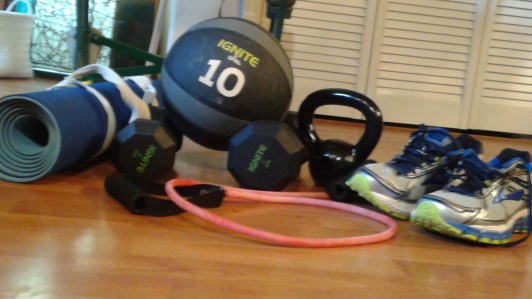
As the day progressed, we had the meeting, I hung out with some friends, I had my workout, lunch and a bit of family time all completed by just shortly after noon. Then…I can’t believe this….Janey talked me into going to—I hate to say it—CostCo (mind you, I’m not a cheap CostCo date)! Afterward (and after a little sticker shock) we went on and bought some grass-fed beef to throw onto the barbee this evening after sitting in my own recipe of fresh oregano, garlic, olive oil and Tabasco marinade. And then I dove into some hammock time with the newest Sunset magazine, reading about Joseph, Oregon (a place I have a hankering to return to).


What’s the Big Deal?

Because I usually get up later on Saturday, I feel rushed throughout the day. Gotta rush the workout; gotta rush the chores; gotta rush dinner prep, and then force myself to relax. Nothing’s at a manageable pace and soon I become frustrated because I feel like I’m running out time. But not today. Today I’m actually functioning in a more human pace; I’m even naturally relaxing and not even feeling guilty about it; which, as you may know, is somewhat of a foreign concept to me.


To Continue or Not to Continue…

Now I’ve gotten a little peek into why maintaining the same to-bed/get-up routine is beneficial. I’m sure there are some well researched and documented reasons around circadian rhythm and emotional stability; but it’s more than that. It’s a victory; minor perhaps, but still a victory. Stephen Covey once wrote that “if we put mind over mattress and arise early in the morning, we will earn our first victory of the day” (Principle-Centered Leadership, 1991, p. 49). I like the phrase mind over mattress and express that to myself on many a work-week morning; and sometimes it actually works.

Maybe this also an aspect of what Scripture is referring to about redeeming the time:

See that you walk circumspectly, not as fools but as wise, redeeming the time.

—Ephesians 5:15-16a

Who knows, maybe I’ll do this again on another Saturday in the future.

Autumn Reset

Why is it I feel the need to do a bit of reset? I don’t know. Maybe it’s because there is a slight chill to the early morning air or that the leaves are starting to turn into glorious displays of color. Or that eating dinner outside now requires us to get bundled up. It could also be because it’s a new school year and also, for the most part, new ministry years for churches.

All of this inspires Janey and me to change how we maintain fun and sustainable approaches to healthy living. Yes, we strive to eat as much fresh organic food as possible. We look for cruelty free meat and eggs and grass-fed, hormone-free beef. We are also thankful that such food is available and that we are able to purchase it.


What’s Missing?

But still, there’s need to change a bit. If you’ve been reading my blog, you know that I’ve greatly changed the way I approach cycling. Now my cycling is more Urban Adventure Riding rather than going for long rides out into the country. Part of the change is to accommodate the fact that the roads are just dangerous out here. Another reason is that typical road bikes don’t really fit my spine very well, but the hybrid bikes do.

One way to compensate for the dangerous roads is to ride into the danger; so rather than the long rides into rolling hills and farms, I now commute to and from work and sometimes church. I take the bike grocery shopping and to doctor’s appointments. And my leisure rides are usually all under 20 miles but include a couple of massive hills. All these rides provide for more interval-type riding (riding hard for bout 30-ish seconds, followed by coasting or light pedaling); which is supposedly a healthier approach to working out, especially as we age (see Drs. Josh Axe, Joseph Mercola and Michael VanDershcelden). But the rains are coming; and no matter how hearty I like to think I’ll be, the reality is that riding in the rain isn’t just miserable, it’s even more dangerous. So, what to do?


So, How’s it Done?

Well, what we’re doing is adding more interval-based workouts into our routines. This requires us to change how we use weights and how we approach our aerobic workouts. It also helps to stave off boredom, continues fueling our desire for healthier eating, and it is opening opportunities for us to work out together!

So over the last several months we have acquired an elliptical trainer and a high-tech exercise equipstationary bike (check out Nordic Track to view the products). We have various barbells, kettlebells, and tension bands.  We also have a few workout DVDs. And we’ve arranged space in our home so we don’t have to rely on going to the gym. So getting to our workout is no more than few steps away or just out of our front door.


But Why?

You might be asking yourself why? Well, we have some good reasons; at least to us they’re good reasons. First, there’s health reasons. Heart disease is on both sides of our family. Most of my relatives died from some sort of heart disease; and I was born with a defective heart valve. Plus, my spine is compromised and one of the best things to do for it is to remain active; not letting the chronic pain stop me but to instead confront the pain with natural remedies found in food and exercise.

Second, we are the temple of the Holy Spirit:

Do you not know that your body is the temple of the Holy Spirit who is in you, whom you have from God, and you are not your own?

­-­1 Corinthians 5:19

I know that my time is in God’s hands, but that’s no excuse for not taking as good of care of myself as I can. Dr. Gary Smalley states that “many people react strongly (at first) against the idea that in order to enjoy healthy relationships, they first have to keep themselves healthy” (The DNA of Relationships, 2004, p. 114). So taking care of ourselves is not selfish, but is instead assisting the indwelling empowerment of the Holy Spirit to be a vital and positive life-source for those around us. And frankly, my base workout now-a-days, alongside cycling, is walking—simple, everyday walking. This is doable, it’s sustainable, and, thankfully, it’s enjoyable!

A Vacation Learned

Sunset_2016

Sunset from the Inn at Spanish Head

Like most people, I love the idea of a vacation. It’s a time to get away, do some out-of-the-ordinary things and to…relax. Just the thought of relaxing spurred the following thought:


We’re on vacation,

still safe away from home…so…

lower those shoulders!


Most of my life I’ve heard that I’m either wound a bit tight or just too intense. I honestly don’t see it, but even my doc told me I need to learn to relax. So this vacation I wanted to relax a bit. But how do you relax when there’s so much packing, unpacking, packing again; traveling; food stuff; and all those activities? Plus I wanted to have some stellar alone-times with God; just me, God and prayer. Then I could really hear his voice.

But I’ve learned a few things along the way and finally applied that learning this last two weeks.


Applied Learning

If I am so focused on the next task, then the current moment slips away. How many “slipped-away moments” need to occur before the vacation itself actually comes to an end? Also, if I’m expecting to hear from God only in special, contrived moments; it’s most likely that I’ll miss His voice altogether. How is this overcome?

Francis Schaffer states that “growth…like all things in our life, [is] a moment-by-moment process” (True Spirituality, 2001, p. 157). Overcoming the inability to relax boils down to the intentionality of living in the moment. Where’s God? In the moment. What matters most now? That which is in the moment.

For instance, hiking is more enjoyable when I am taking in the sights, sounds, and smells of the moment. Plus I can better enjoy the physical effort of my body working hard to carry me to the next step, then the next, then the next. Rather than being solely focused on getting enough steps on my pedometer, or reaching a specific mile marker; the hike is more enjoyable when I stop to watch a honey bee working on a purple lupine. Or when I ask the fly fisher if he’s caught anything or simply feeling the warmth of the sun’s rays radiating on my chest. Before I know it my mind is relaxed, work worries have dissipated as the morning mist on the river and suddenly I sense the presence of the Holy Spirit. I’m in the moment and God is with me…in the moment. Jesus even lived in the moment and taught His followers not to worry but to trust God instead (see Matthew 6:25-34).

Then there’s the time around the campfire with Grandpa and Caleb. We’re all in the moment just chatting about whatever strikes our fancy. Or the moment right before we mash through a Class 4 rapid at Box Springs on the Deschutes River; we’re all looking at each other with smiles mixed with thrill and fear. We’re all thinking the same thing, “I’m not falling out!” Then there’s flying a kite on the sands of Lincoln City. The family is together, each taking turns flying our multi-colored kite.

What do these moments have in common? They are shared moments. We’re not all sitting

BB_Simmit

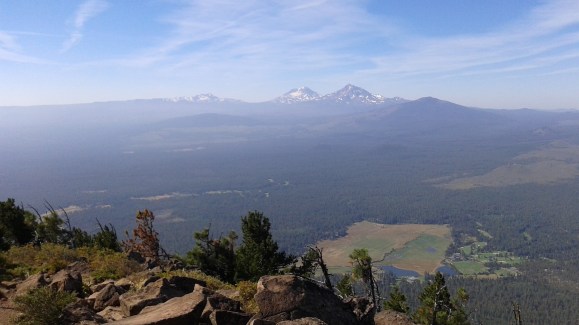
The Three Sisters seen from the summit of Black Butte

around fretting about packing or about what’s for dinner; we are instead enjoying a campfire, or a white-water raft trip or family time at the beach. These are the moments that make a vacation. And these are the vacations that build memories, happy memories. Like climbing the summit of Black Butte with my ten-year-old and drinking in the spectacular view together. Or watching the humpback whales feeding just off the coast line while we’re having dinner. Or watching the sun setting in the Pacific Ocean, hoping to see the green flash. Or listening to Grandpa telling us stories from his past.


I’m Just Starting to Get It!

I’m still learning of course, but at least I’m finally beginning to understand how to “do” vacation. It all rests in the moment. And it’s funny, when I live more and more in the moment, I fret less over the future, I actually feel relaxed…and, yes…my shoulders do finally lower!

Pine Cones and Simplicity

Pine Cone

Here comes the Pine Cone fleet! 

Spending time in the wilderness always resets my life a bit. It’s not always relaxing but I usually come away with either a clearer understanding of something or experience something brand new. Last Thursday morning was a combination of both.


Thursday Morning with Caleb

I was having my early morning quiet time while sitting on the bank of the Metolious River; Caleb, our ten year old son, was with me. I was busily praying and journaling when I noticed him tossing pine cones into the water. Their buoyancy fascinated him as did the quickness of them being carried away by the current. In no time, he was gathering armfuls of them, throwing them in at the same time and then following them by running down the bank as they floated away. Watching him I wrote in my journal:

“Caleb is playing a pine cone fleet game. He tosses them into the water and watches them ‘race’ through the channel and through a vegetation tunnel and out the other side if they don’t get stuck.”

He was having great fun just collecting, tossing, racing and watching pine cones flowing away in the river. I marveled at the simplicity of it. As most American kids his age, he has a computer with some appropriate games on it, he has a Wii U loaded with Lego City Undercover and we recently got him a smart phone (the Weather.com app is his favorite). So the kid is definitely “gadgetized,” but on this Thursday morning he was unplugged and loving every second of it.


“Light Bulb”

I was struck by the simplicity of his game. It wasn’t complex, the parts were easy to find and already assembled, and there was only one rule: which ever pine cone got to the finish line first, won! Simple, basic and fun.

His simple pine cone game got me thinking about faith, especially faith in Christ. How easy it is to complicate it, losing sight of the basic elements of our faith. We over-complicate God’s grace and mercy and certainly over-complicate salvation. We lose sight of the significance of the resurrection and of the ascension.  It reminds of 2 Corinthians 11:3:

But I am afraid that, even as the serpent beguiled Eve by his cunning, your minds may be corrupted and led away from the simplicity of [your sincere and] pure devotion to Christ. Amplified Bible (AMP)

While I greatly enjoy deep theological discussions and writings, I can’t let the seriousness of such discussions distract me from the simple truths. Truths such as it is “by grace you have been saved through faith, and that not of yourselves; it is the gift of God, not of works, lest anyone should boast” (Ephesians 2:9), and that “in Him we live and move and have our being: (Acts 17:28), or the biggie that Paul and Silas expressed to the Philippian jailer: “Believe on the Lord Jesus Christ, and you will be saved” (Acts 16:31).

These are simple, yet profound truths. They are the pine cones in the current of our lives. And the one “rule” to this is faith. There are no set of complexities we must accomplish first and we don’t have to assemble it because it is fully assembled in Christ. We just need faith; yes, even the faith of a child (Matthew 18:1-5 and Mark 10:14-15).

Focused Prayer through Cycling?

I’ve recently noticed how quickly my mind becomes focused when riding a bike down a steep hill at nearly 30 miles an hour. A more intense, laser-type focus springs forth when this descent has me inches away from a rumbling tractor-trailer on my left and a four inch concrete curb on my right. Prayer suddenly emerges when the bike path I’m navigating through is debris-strewn with rocks, twigs, tire-puncturing glass and odd bits of metal. Then, invariably, the light turns red! My mind effortlessly switches to shifting gears, applying brakes and unclipping my right cleat from the pedal (see my post on Bike Tipping and Humility for more on how not to unclip). At the red light I notice my breathing is heavy but my mind is amazingly aware and engaged. I’m awake! I’m alive! And I’m loving life!


I Can’t Run?

For some reason, this reminds me of when my neurosurgeon told me stop running; it was like a gut-punch knocking the wind out me. I loved to run. I could pray when I ran; meditate or ponder some complex work-related issue when I ran. Running was also the quickest way to stave off those pesky love handles!

Cycling certainly helps keep me fit and trim, but I can’t just put my shoes on and run. And I can’t ride my bike while lost in prayer or some other deep thought. So I’ve had to adapt.

Cycling requires more preparation and more equipment. But, alas, I’ve been riding consistently since the summer of ’13 when God blessed me with the ability to buy a newer bike that better fit my “newer” neck. I did a lot of riding when I was younger, but gave it up when I started a family. When I wanted to start riding again, I discovered my old bike didn’t fit me anymore, primarily due to neck surgeries; after all, triple fusions have a way of messing with mobility! So I needed a new bike. Granted, it’s not a super expensive bike, but neither am I a super-expensive rider. Do I really need carbon everything and the fanciest gadget that talks to every satellite? No, not really, I’m not going to set any Strava records and I get dropped in every group ride I participate in; so my equipment is very solid, mid-range stuff. Maybe someday I’ll share more details about my specific bits of equipment.


A Little Background

long_road.jpgBefore we moved to the west side of town, my rides were typically flat and long; I could get on a long stretch of country road and let my mind sort of zone out. It could wander off in all sorts of different directions.
Living out here though, letting my mind wander even briefly could have disastrous results. I need to stay focused on the long, hard climbs; otherwise, I might slow so much I fall over or simply mentally give up. A wandering mind while urban adventure riding (UAR) could cause me to miss the car pulling out in front of me, or the light turning red or the box of nails spilled in the bike path (yes that really happened).

But what it is also teaching me is to live in the moment. Each moment in UAR can bring opportunities. Opportunities to sprint through the yellow light or climb the big hill in the midst of a bumper-to-bumper traffic jam or to watch kayakers slide effortless under the Union Street foot bridge. And with Pokeman Go, there always fully distracted bi-peds crossing my path! It’s awesome! But it requires me to be in the moment each moment.


Living in the Moment and Prayer

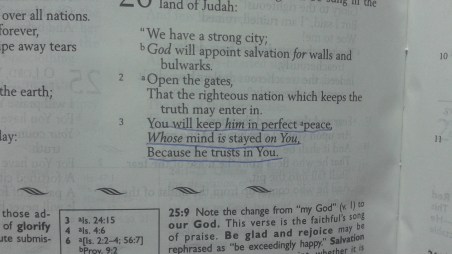
This is new to me. I’m always thinking ahead, like to the next meeting, the next vacation, Stay_mind_verse.jpgor even what’s for dinner. I rarely live in the moment. And not living in the moment makes me a terrible listener and it inhibits my prayer life. Training my mind to focus, even if it is through UAR, is developing the skill of “staying my mind.” Look what Isaiah says:

You [God] will keep him in perfect peace, whose mind is stayed on You, because he trusts you. (26:3)

This means that as I focus my mind, or lean my mind upon God, God can work His peace in my soul. Such a stayed mind helps me allow the peace of Christ to fill me (see John 14:27 and Colossians 3:15). Being scattered and unfocused just causes my mind to be agitated or simply distracted. If my prayer life is scattered, then what does that say about my heart toward God? Am I really seeking His kingdom first (see Matthew 6:33), or am I jumping around with a to-do list I want God to fill?  So the skills of living in the moment that I’m learning in my UAR efforts are also helping me in my prayer life. Now when I sit and pray, I’m more intentional about being focused on just God, His character and, of course, His grace and mercy.

Now I don’t think everyone needs to adopt a UAR life, but I do think each of us has something in our lives that we can learn from. Take gardening, for instance. Working the soil and caring for plants has way of slowing and then focusing the mind. Or what about model building, jigsaw puzzles or hiking? If we look for learning opportunities, we may be surprised how many there are in our everyday lives.